Equine Skin Conditions
Strengthening your horse’s first line of defense — the skin
Recognizing and Managing Skin Disease in Horses
The skin is the body’s largest organ and serves as your horse’s first line of defense against the environment. When this barrier is weakened, even minor irritations can become uncomfortable, persistent, or recurrent. Horses in Southern Alberta are particularly vulnerable due to constant exposure to moisture, insects, allergens, and rapidly changing weather conditions.
Conditions We Diagnose and Treat
Pastern Dermatitis (Mud Fever) – Pastern dermatitis, commonly known as mud fever, affects the skin of the lower legs, particularly in wet or muddy conditions. Prolonged moisture weakens the skin barrier, allowing bacteria or fungi to invade.
Sarcoids and Equine Skin Tumours – Sarcoids are the most commonly diagnosed skin tumours in horses and can vary greatly in appearance and behavior. They may remain stable, slowly enlarge, or become aggressive and difficult to manage.
Bacterial and Fungal Skin Infections – Bacterial and fungal infections often develop when the skin barrier is damaged by moisture, trauma, or untreated, underlying allergies. These infections can be localized or widespread and may recur if the root cause is not addressed.
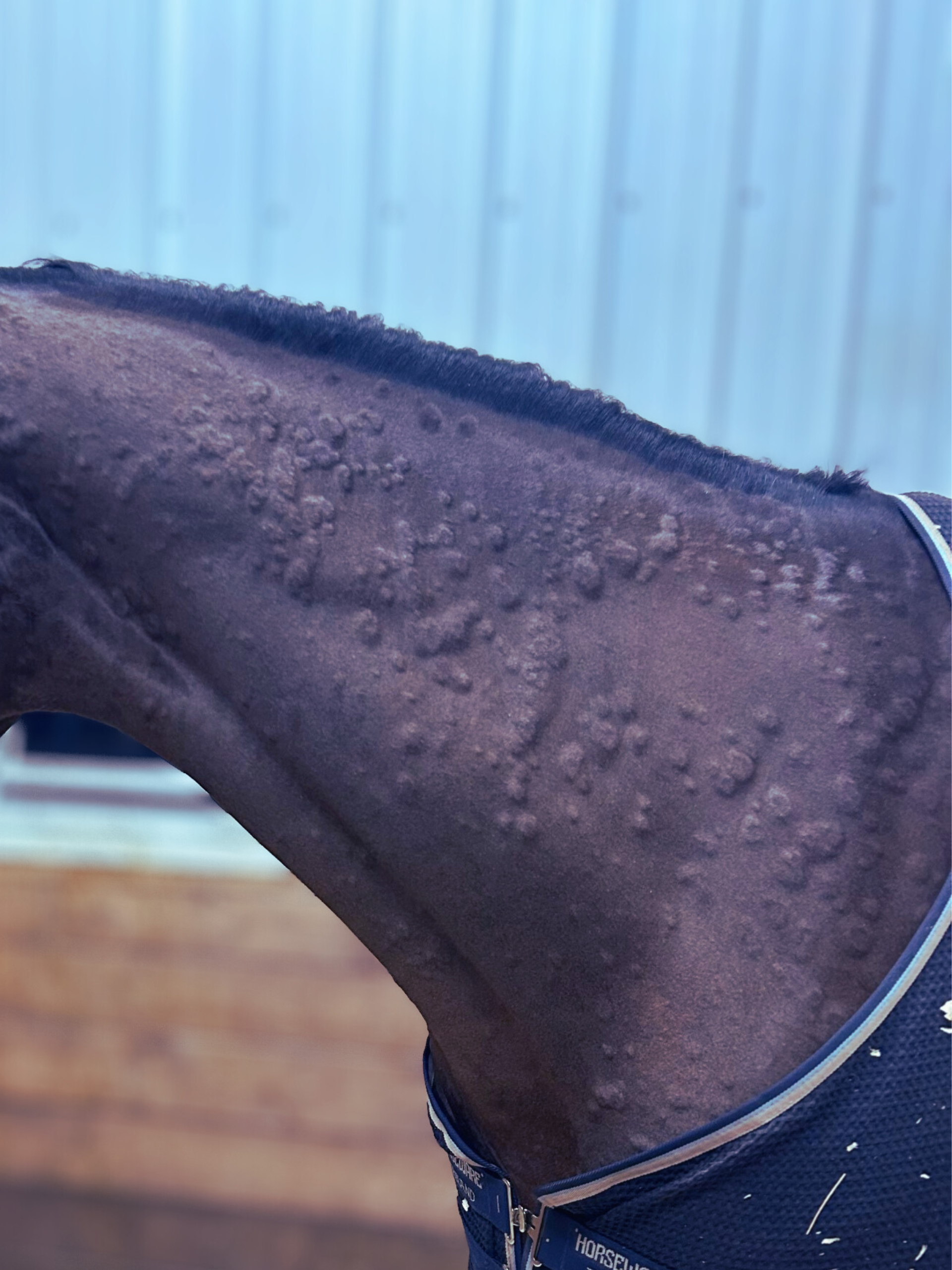
Urticaria (Hives) – Urticaria, or hives, appear as raised, firm swellings on the skin and may come and go quickly. Hives are often linked to allergic reactions, but in some cases the trigger is not immediately obvious.
Chronic or Non-Healing Skin Lesions – Some skin wounds or lesions fail to heal as expected. This may be due to repeated trauma, infection, impaired circulation, or underlying disease.
Recurrent Skin Infections Secondary to Allergies – Allergic skin disease can weaken the skin’s natural defenses, making horses more susceptible to repeated bacterial or fungal infections. These horses often improve temporarily with treatment, only for symptoms to return.
PetDerm’s Approach to Equine Skin Disease
At PetDerm, each horse receives an individualized assessment that considers:
- Medical history and environmental factors
- Pattern and progression of skin changes
- Response to previous treatments
By taking a structured, dermatology-focused approach, we aim to provide clearer answers and more effective long-term solutions for horses with skin disease.
Equine Dermatology Referral Process
At PetDerm equine services, we prioritize your horse’s comfort and well-being. Simply ask your veterinarian to complete our online referral form, and once it’s submitted, a member of the PetDerm team will reach out to guide you through the next steps.
Appointments are scheduled offsite, and we collaborate with your primary veterinarian to tailor each appointment to your horse’s specific needs.
Frequently Asked Questions
Yes. Adjustments such as improving regular hygiene, reducing moisture exposure, managing insects, or modifying stable conditions can play an important role in preventing flare-ups and supporting treatment success.
Some equine skin conditions can be ongoing and require long-term management rather than a one-time treatment. With proper care, many horses can remain comfortable and active even with chronic skin disease.
They can. Skin pain, irritation, or lesions—especially in areas under tack or around the legs—can cause discomfort, behavioral changes, and reduced willingness to work. Managing skin disease helps support both comfort and performance.
You should consider a dermatology veterinary evaluation if a skin problem:
- Persists longer than expected
- Keeps returning after treatment
- Causes significant itching or discomfort
- Spreads or worsens over time
- Interferes with riding, training, or daily comfort.
Early assessment can help prevent minor issues from becoming chronic.
Horses are constantly exposed to moisture, insects, dirt, allergens, and changing weather conditions. These factors can contribute to weakening the skin’s natural barrier and making it easier for irritation, infection, or allergic reactions to develop. Most frequently seen on the body like the legs, mane, tail, and face.
Explore Equine Services